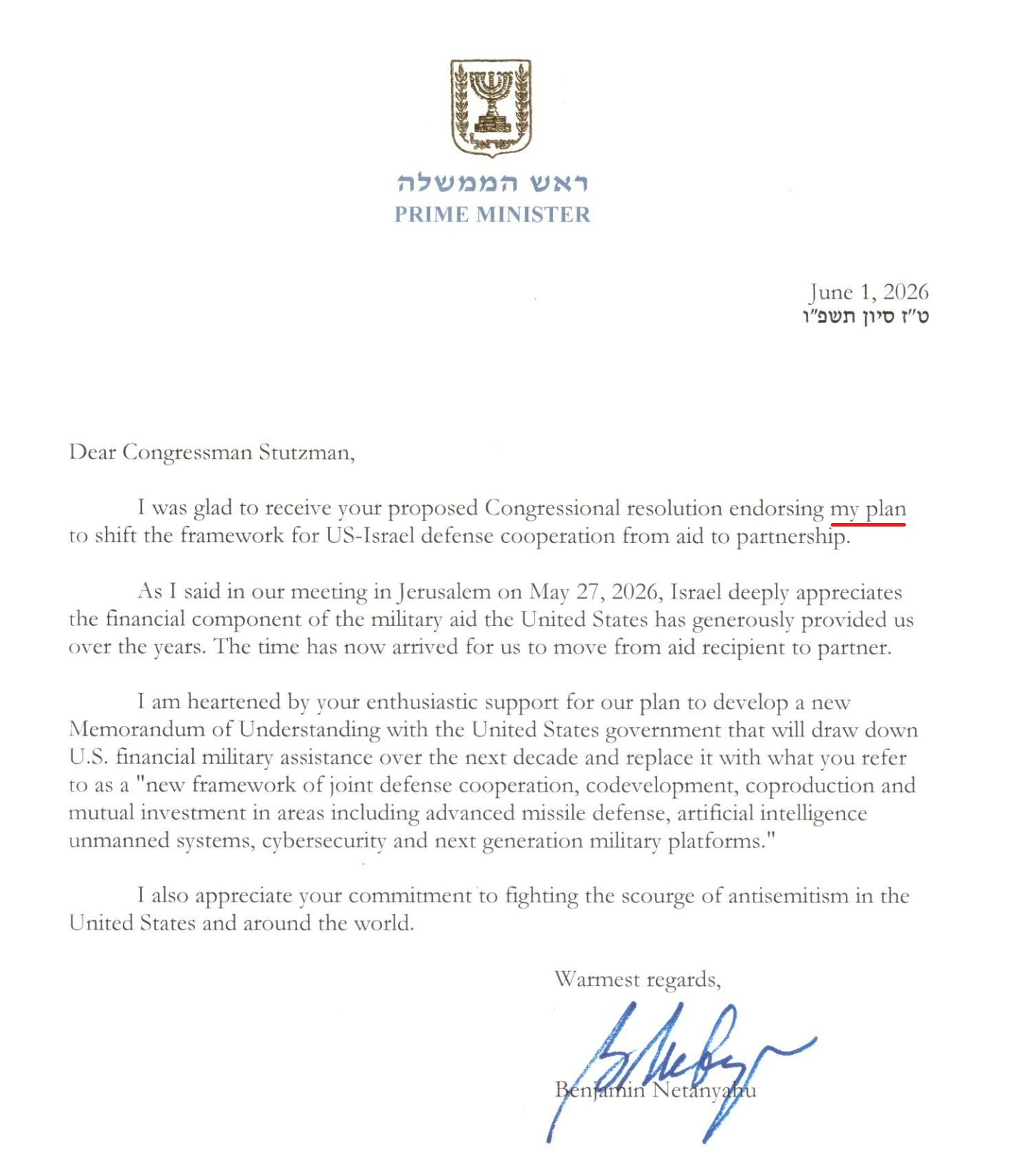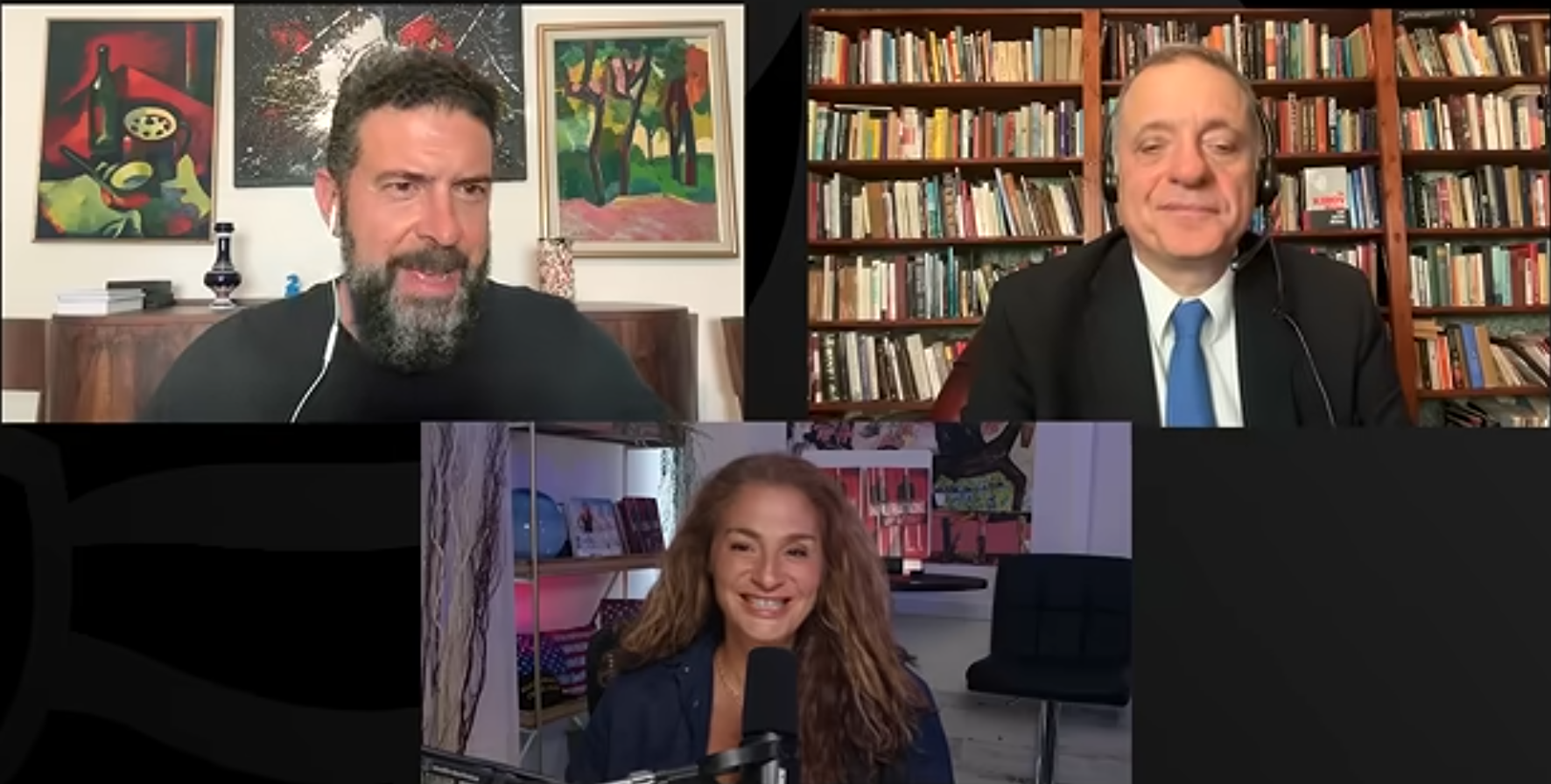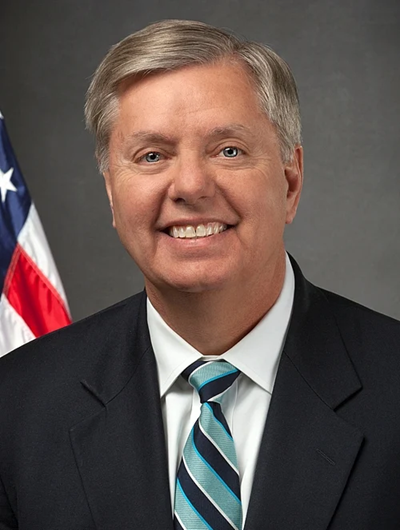
Tribute to Lindsey Graham (1955 – 2026)


Lindsey Graham (1955 – 2026)

Lindsey Graham (1955–2026), a U.S. Representative (1995–2003) and Senator (2003–2026) from South Carolina, was one of the most consistently hawkish/interventionist figures in Congress on foreign policy.

As a veteran (U.S. Air Force JAG, including recall to active duty during the Gulf War era) and member of the “three amigos” group with John McCain and Joe Lieberman, he strongly backed an interventionist U.S. role abroad, especially post-9/11 in the Middle East and the broader War on Terror. He voted for key authorizations, supported funding/surges/continued presence, criticized withdrawals, and made public statements calling for robust military action.

A precise total count of “wars, conflicts, and excursions” is not straightforward—support can mean votes on authorizations/funding, public advocacy, or opposition to drawdowns. He backed the vast majority of major U.S. military engagements during his political career (particularly Middle East-focused ones), but he was skeptical of or opposed certain Clinton-era actions (e.g., aspects of the 1999 Kosovo intervention).

He supported at least 6–8 major ones (plus related operations, funding bills, and smaller actions like strikes or anti-ISIS efforts). Here is a list of the primary ones, with dates, evidence of his support, and casualty comparisons (U.S. military deaths vs. estimates of other deaths—enemy combatants + civilians). Casualty figures are from U.S. government/DoD data where available for U.S. deaths and widely cited studies/projects (e.g., Costs of War, Iraq Body Count, Wikipedia syntheses of estimates) for totals. Note that total (“other”) death estimates vary significantly by methodology (documented vs. statistical/excess mortality) and often include indirect deaths; ranges are provided.

  1. Gulf War / Operation Desert Storm (1990–1991)
  • Graham’s support: Recalled to active duty as an Air Force JAG lawyer (stateside at McEntire ANG Base); prepared deploying pilots on laws of war. As a military veteran and later conservative politician, he aligned with support for the U.S.-led coalition effort to expel Iraq from Kuwait.
  • Casualties: U.S. military deaths ≈ 383 total (148 battle/hostile deaths; rest non-hostile accidents). Other deaths (primarily Iraqi military + civilians): Estimates range from ~20,000–50,000+ Iraqi military killed in combat/air campaign + ground phase, plus ~3,500+ direct civilian deaths; broader totals (including 1991 uprisings) cited up to 100,000–200,000+ in some analyses.
  1. War in Afghanistan / Operation Enduring Freedom (2001–2021)
  • Graham’s support: Voted for the 2001 Authorization for Use of Military Force (AUMF) as a House member; strongly advocated continued U.S. presence, training Afghan forces, and opposed rapid withdrawals (including Biden’s 2021 pullout, which he called a “disaster”). He supported surges/strategy adjustments.
  • Casualties: U.S. military deaths ≈ 2,420–2,460. Total deaths (direct violence): Estimates 176,000–212,000+ overall (including ~46,000 civilians, 66,000–92,000 Afghan security forces, Taliban/opposition fighters, and coalition allies).
  1. Iraq War / Operation Iraqi Freedom (2003 invasion + occupation/operations into the 2010s)
  • Graham’s support: Voted for the 2002 Iraq AUMF; strongly supported the invasion, the 2007 “surge,” ongoing funding, and criticized calls for withdrawal. He traveled to Iraq multiple times and defended the mission.
  • Casualties: U.S. military deaths ≈ 4,431–4,500 total. Total Iraqi deaths: Highly variable estimates—documented civilian violent deaths ~187,000–211,000 (Iraq Body Count project); broader excess/violent death estimates from ~100,000+ (early years) to 600,000+ (e.g., 2006 Lancet study for 2003–2006 period). Total violent deaths often cited in the hundreds of thousands.
  1. 2011 NATO-led military intervention in Libya (no-fly zone + strikes to oust Gaddafi)
  • Graham’s support: Early and vocal advocate for a no-fly zone and robust action; called to “cut the head of the snake off” by targeting Gaddafi’s inner circle and supported arming rebels.
  • Casualties: U.S. military deaths: Minimal/none in direct combat (U.S. participated in initial phases with low overall coalition combat losses). Libyan deaths (2011 conflict): Estimates 15,000–30,000 total (combatants on both sides + civilians); some post-war Libyan government figures lower (~10,000 range); NATO airstrikes linked to at least 72 confirmed civilian deaths in specific investigations.
  1. U.S.-led campaign against ISIS (Operation Inherent Resolve) in Iraq and Syria (2014 onward, major combat phase through late 2010s)
  • Graham’s support: Supported airstrikes, U.S. presence, and operations to defeat ISIS; criticized insufficient or limited responses and advocated stronger action.
  • Casualties: U.S. military deaths: Low (dozens across the broader campaign). Total deaths in context: Part of Syrian civil war (~500,000–650,000+ total deaths since 2011 across all parties) + Iraqi operations. ISIS killed tens of thousands; coalition airstrikes caused thousands of civilian deaths (estimates vary, e.g., thousands per monitoring groups like Airwars).
  1. U.S. strikes and involvement in Syria (various phases, e.g., 2017–2018 chemical weapons strikes on Assad regime, ongoing anti-ISIS/Kurd support)
  • Graham’s support: Supported targeted strikes on Assad (e.g., 2018); advocated more robust strategy against regime, Russia, and Iran influence while backing anti-ISIS efforts.
  • Casualties: U.S. deaths: Very low. Overlaps with ISIS/Syrian civil war totals above (hundreds of thousands overall in Syria).
  1. U.S./Israeli military actions against Iran (recent conflict phase, ~2025–2026, including strikes/“Operation Epic Fury”)
  • Graham’s support: Longtime advocate for pressure/regime change; strongly supported strikes, military action, and related efforts (public statements praising operations and calling for sustained action).
  • Casualties: U.S. deaths: Likely very low or none in direct combat (airstrikes/support role). Other deaths: Reports of over 7,300 killed in the conflict (including civilians; specific breakdowns vary by source).

Additional notes:

  • Graham also supported related efforts like Saudi-led operations in Yemen (with U.S. logistical/support role) and aid packages (e.g., to Ukraine, Israel), but these were not direct large-scale U.S. troop combat wars.
  • Smaller “excursions” (e.g., specific drone strikes, anti-al-Qaeda operations, or funding for ongoing presence) number in the dozens over his career and generally had low U.S. casualties but contributed to broader tallies.
  • He opposed or was cautious about some earlier interventions (e.g., elements of Kosovo 1999 under Clinton).

Overall, Graham supported the large majority of significant U.S. military actions in his era as a leading interventionist voice. The listed conflicts involved thousands of U.S. deaths (mostly in Afghanistan and Iraq) versus far higher totals for local populations (often tens or hundreds of thousands per conflict, with wide estimate ranges). These figures reflect the human cost of prolonged engagements; exact “other people” numbers remain debated due to incomplete records, differing definitions (combatants vs. civilians), and indirect effects.

Sources for positions include Graham’s Senate statements, congressional records, and reporting on his votes/advocacy. Casualty data draws from DoD summaries, Costs of War Project, Iraq Body Count, and peer-reviewed/monitoring estimates.

Ranked list of the major conflicts Lindsey Graham supported (as detailed in the prior response), ordered by approximate scale of total deaths (all parties combined: U.S. military + local combatants + civilians). Wounded figures are included where available, though they are generally less precisely documented than deaths—especially for non-U.S. sides.

Figures are estimates drawn from U.S. Department of Defense data (for U.S. casualties), Costs of War Project, Iraq Body Count, monitoring organizations, and historical analyses. Totals for “other” deaths/wounded vary widely due to methodology (documented vs. statistical estimates), inclusion of indirect effects, and fog of war. Ranges reflect this uncertainty. Overlaps exist (e.g., anti-ISIS operations in Iraq/Syria). Recent conflicts (e.g., Iran) have preliminary data as of mid-2026.

Ranked by Estimated Total Deaths (Highest to Lowest)

  1. Iraq War (2003 invasion + subsequent operations)
    • Total deaths (all parties): Hundreds of thousands (documented civilian violent deaths ~187,000–211,000; broader excess/violent death estimates 100,000–600,000+ in early years).
    • U.S. deaths: ~4,431–4,500 total.
    • Wounded: U.S. ~31,994–32,000+; total/other (Iraqi) estimates in the hundreds of thousands (precise figures limited).
    • Notes: Highest direct U.S. involvement and casualties among the list.
  2. Syria involvement / Anti-ISIS campaign (2014 onward, including strikes)
    • Total deaths (all parties, broader Syrian civil war context): ~500,000–650,000+ (full civil war since 2011; ISIS-specific and coalition actions contributed significantly).
    • U.S. deaths: Low (dozens across the campaign).
    • Wounded: U.S. low (hundreds or fewer reported); total/other in the civil war context: hundreds of thousands. Coalition airstrikes linked to thousands of civilian deaths/wounded in some tallies.
    • Notes: U.S. role was primarily airstrikes, special operations, and support against ISIS (not the full civil war). Overlaps with Iraq operations.
  3. War in Afghanistan (2001–2021)
    • Total deaths (all parties): 176,000–212,000+ direct violence (including ~46,000 civilians, Afghan forces, Taliban/opposition).
    • U.S. deaths: ~2,420–2,460.
    • Wounded: U.S. ~20,000–23,500+; total/other significantly higher (tens to hundreds of thousands including local forces and civilians).
    • Notes: Long-duration conflict with substantial U.S. ground presence.
  4. Gulf War / Operation Desert Storm (1990–1991)
    • Total deaths (all parties): Tens of thousands (Iraqi military ~20,000–50,000+ killed; broader estimates up to ~100,000+ including civilians and uprisings).
    • U.S. deaths: 148 battle deaths).
    • Wounded: U.S./coalition ~467–776 (U.S. portion hundreds); Iraqi ~75,000+.
    • Notes: Short, high-intensity conventional war with one-sided casualty ratios.
  5. 2011 NATO-led intervention in Libya
    • Total deaths (all parties): 10,000–30,000 (combatants + civilians during 2011 phase).
    • U.S. deaths: Minimal to none in direct combat.
    • Wounded: Limited data; NATO airstrikes linked to dozens of confirmed civilian deaths (e.g., at least 72 in investigated strikes); broader Libyan estimates in the thousands.
    • Notes: Primarily air campaign with U.S. support for no-fly zone and strikes.
  6. U.S./Israeli military actions against Iran (~2025–2026, e.g., Operation Epic Fury and related strikes)
    • Total deaths (all parties): Over 7,300 reported (preliminary; includes civilians).
    • U.S. deaths: At least 13 (reports as of early-mid 2026).
    • Wounded: U.S. ~200–232+; total/other likely thousands (specific breakdowns emerging).
    • Notes: Airstrikes and support role; data still developing as of July 2026.

Summary of Scale

  • Highest overall human cost (deaths + wounded): Iraq and Afghanistan wars, followed by the broader Syria/ISIS context. These involved prolonged U.S. ground presence or heavy operations.
  • Lower scale: Gulf War (intense but brief), Libya (air-focused), and the recent Iran conflict (ongoing/preliminary figures).
  • U.S. casualties were a small fraction of total deaths/wounded in every case except the most asymmetric early phases.
  • Wounded often outnumber deaths by ratios of 3:1 or higher in modern conflicts, but non-U.S. wounded data is frequently incomplete.

These rankings reflect the cumulative human toll associated with each conflict. Graham’s support (via votes, statements, and advocacy) aligned with most of these, particularly the higher-cost, longer-duration ones in the Middle East and War on Terror. Figures can shift with new data or different counting methods (e.g., direct violence vs. indirect deaths from infrastructure collapse).

Lindsey Graham (R-SC) was one of the most consistent and vocal Republican supporters of U.S. assistance to Ukraine throughout Russia’s full-scale invasion that began in February 2022. As a longtime foreign policy hawk and member of the Senate Armed Services Committee, he viewed support for Ukraine as aligned with U.S. strategic interests: weakening Russia (a key adversary), bolstering European security and NATO’s eastern flank, advancing democracy, and benefiting the American defense industry.

He frequently crossed party lines on this issue, worked with Democrats, and maintained strong advocacy even as some Republicans grew skeptical of open-ended aid—especially after Donald Trump’s influence grew in the GOP.

Early Advocacy (2022 Onward)

In May 2022, Graham published an op-ed titled “Why I support a Ukraine aid package before it’s too late.” He backed the roughly $40 billion supplemental that included weapons, economic support, and humanitarian aid. Key arguments included:

  • Ukrainian victory over Russia would be “a victory for democracy itself.”
  • Providing advanced weapons keeps the U.S. defense industrial base running and creates American jobs.
  • Delaying aid risked a longer, costlier conflict.

He consistently pushed for “state-of-the-art weapons” to help Ukraine “finish the job” against Russian invaders.

Key Votes on Aid Packages

Graham supported major bipartisan supplemental aid bills:

  • In April 2024, he voted in favor of the House-passed national security supplemental providing aid to Ukraine, Israel, and Taiwan. The package included military assistance, allowed seizure of some Russian sovereign assets, and converted portions of aid into loans (reducing the direct burden on U.S. taxpayers). It passed the Senate with strong bipartisan support.

He also backed earlier emergency supplementals (FY2022–FY2024) that collectively appropriated nearly $174 billion in total U.S. support for Ukraine-related efforts (security, economic, and humanitarian), with significant portions for direct military aid.

Sanctions and Pressure on Russia

Graham was a leading voice for aggressive sanctions:

  • He co-led (with Sen. Richard Blumenthal, D-CT) bipartisan legislation for nearly two years targeting Russia’s economy.
  • In his final days (July 2026), during a visit to Kyiv, he announced that the Trump White House had agreed to support a revised version of the sanctions bill. It aimed to cripple Moscow’s war economy, impose tariffs on countries (e.g., China) buying Russian oil, and give President Trump additional tools to pressure Russia toward negotiations. Graham described it as providing “the formula to end this war.”

He urged China to use its influence on Putin and supported making Russia a state sponsor of terrorism designation (partly over the abduction of Ukrainian children).

Multiple Visits to Ukraine

Graham visited Ukraine approximately 10 times during the war (according to President Volodymyr Zelenskyy). His trips often included meetings with Zelenskyy, inspections of Ukrainian capabilities, and public calls for more U.S. support.

Notable recent activity:

  • In his last public trip (around July 10–11, 2026), he met Zelenskyy in Kyiv, toured a Ukrainian drone factory (SkyFall), praised Ukraine’s drone technology (e.g., Vampire bombers and Shrike FPV models), and urged deeper U.S.-Ukraine partnership on drones.
  • He emphasized making Ukraine “more lethal,” strengthening air defenses, and combining military aid with sanctions and diplomacy.
  • In final remarks from Kyiv, he expressed optimism: “I’ve never been more optimistic than I am today that we have the formula to end this war… help Ukraine be more lethal… find the off-ramp not to humiliate Putin but to end this war so that Ukraine will thrive and survive.”

Warnings and Strategic Views

Graham repeatedly warned against pausing or reducing U.S. aid, arguing it could lead to disastrous outcomes for Ukraine (comparing risks to the Afghanistan withdrawal). He advocated a long-term approach focused on Ukrainian self-reliance through advanced weapons, training, and industrial cooperation rather than indefinite U.S. blank checks.

He sometimes linked Ukraine aid to other priorities (e.g., border security in earlier negotiations) but ultimately supported the packages when they advanced.

Relationship with Trump and Later Years

As a close Trump ally in his later years, Graham worked to align Ukraine policy with the Trump administration—particularly by securing White House buy-in for revised sanctions legislation that empowered the president. While some reports noted occasional tactical shifts to accommodate Trump’s preferences on timing or conditions, Graham remained a steadfast advocate for robust support.

Legacy and Tributes

Graham died on July 11/12, 2026, shortly after returning from his final Ukraine trip. Tributes from Ukrainian and NATO leaders highlighted his role:

  • Zelenskyy: Praised him as a “true defender of freedom” who visited “when it was most needed.”
  • NATO allies (e.g., Estonia, Latvia): Called him a “steadfast friend,” strong supporter of NATO’s eastern flank, and unwavering advocate for assistance to Ukraine against Russian aggression.
  • He was remembered as a champion of trans-Atlantic ties and consistent voice for aiding Ukraine.

In summary, Graham’s support for Ukraine was long-standing, bipartisan where possible, and focused on lethal aid, sanctions, and strategic pressure on Russia. He saw it as essential to U.S. and allied security. His final actions—securing sanctions progress and visiting Kyiv—underscored his commitment until the end.

Lindsey Graham (1955–2026) was one of the strongest and most consistent supporters of Israel in the U.S. Senate. His advocacy spanned decades and included legislative action, public statements, personal relationships with Israeli leaders, and alignment with pro-Israel causes.

Detailed breakdown of his support, categorized as professional (legislative/public roles), personal (visits, relationships, private advocacy), and private (campaign finance and behind-the-scenes elements). This draws from his Senate record, statements, visits, and tributes following his death in July 2026.

Professional Support (Legislative and Public Advocacy)

As a Senator (especially on the Armed Services and Appropriations Committees), Graham consistently backed U.S. military, economic, and diplomatic support for Israel:

  • Aid Packages and Funding:
    • Voted in favor of the April 2024 national security supplemental appropriations bill, which included significant military aid to Israel (alongside Ukraine and Taiwan). He described it as “necessary and vital aid” and highlighted its timing during Passover celebrations. He supported provisions allowing seizure of Russian assets and converting some aid into loans.
    • Supported earlier Israel Security Supplemental Appropriations measures and National Defense Authorization Act (NDAA) provisions related to Israel (e.g., security assistance and policy matters).
    • Advocated for unrestricted weapons transfers, including bombs and advanced systems, stating Israel should receive “the bombs they need to end the war” and could not afford to lose.
  • Military and Technological Partnership:
    • Pushed for joint U.S.-Israel weapons development, describing it as a potential “21st century ‘Manhattan Project’” for mutual security benefits (sharing technology and enhancing both nations’ capabilities).
    • Supported accelerating aspects of Israel’s military self-reliance while fiercely opposing any reduction or phase-out of U.S. aid. In private conversations (later recounted by Netanyahu), he reacted strongly against suggestions of ending U.S. military funding, insisting it must continue.
  • Positions on Conflicts and Threats:
    • Strongly backed Israel’s right to defend itself after the October 7, 2023, Hamas attacks. Urged decisive victory: “Enough already. Destroy Hamas. Do to Hamas what we did to the Germans and the Japanese during World War II. Annihilate them and rebuild the Palestinian society like we did with Germany and Japan.”
    • Championed U.S. and joint U.S.-Israeli military actions against Iran (including 2025–2026 strikes), viewing Iran’s nuclear program and proxies (Hamas, Hezbollah) as existential threats to Israel. He was a prominent advocate in Washington for these operations.
    • Pushed for sanctions on Iran and its supporters; advocated Israel-Saudi normalization as a potential “big prize” outcome of actions against Iran.
    • Opposed any U.S. pauses or conditions on aid (e.g., over Rafah operations) and criticized efforts to withhold weapons.
  • Resolutions and Broader Policy:
    • Supported resolutions affirming Hamas cannot retain control in Gaza and other pro-Israel measures.
    • Consistently framed U.S. support for Israel as a strategic investment that strengthens the IDF, shares technology, and advances U.S. interests.

Personal Support (Visits, Relationships, and Direct Engagement)

Graham maintained close personal ties and demonstrated commitment through direct engagement:

  • Visits to Israel: He made multiple trips to Israel over the years, meeting with officials, inspecting security situations, and publicly reaffirming the alliance. These visits underscored his hands-on interest in the Middle East.
  • Relationship with Israeli Leaders:
    • Had a particularly close personal relationship with Prime Minister Benjamin Netanyahu. Netanyahu called him “a great friend of Israel,” “a cherished friend of mine,” and “one of the great champions of the American-Israeli alliance.” He described Graham as understanding that “the security of Israel and the United States is inseparable.”
    • In their last conversation (before Graham’s death), Netanyahu discussed phasing out U.S. aid; Graham strongly opposed it and threatened to rally Senate support to maintain it.
  • Public and Private Advocacy: He frequently spoke of the U.S.-Israel alliance in personal terms, linking it to shared values and security. Even as wars in Gaza and Iran eroded broader American support, Graham remained a steadfast champion.

Private Support (Campaign Finance and Behind-the-Scenes)

Public records show alignment through political funding networks (private donor support for his pro-Israel positions):

  • Campaign Contributions: Graham received substantial support from pro-Israel groups and PACs. Over $1 million in total documented contributions from pro-Israel interest groups, including significant amounts from the American Israel Public Affairs Committee (AIPAC) and the Republican Jewish Coalition (which funneled over $1 million in at least one cycle to support his campaigns).
  • Behind-the-Scenes/Private Conversations: His private discussions with Netanyahu (e.g., passionately defending continued aid) reflect personal conviction beyond public roles. He consistently tied Israel’s security to America’s in private settings as well.
  • Philanthropy: Public records do not highlight major standalone personal charitable donations to Israeli causes outside political channels. His support was primarily expressed through political advocacy and legislative work rather than documented private philanthropy.

Summary and Legacy

Graham’s support for Israel was unwavering across his career. He viewed the U.S.-Israel relationship as a strategic partnership and moral imperative, consistently advocating for robust military aid, technological collaboration, decisive action against threats (Hamas, Iran), and diplomatic initiatives like normalization.

Following his death in July 2026, Israeli Prime Minister Netanyahu and pro-Israel organizations (e.g., StandWithUs) paid tribute to him as “a steadfast friend of Israel and the Jewish people” who “never wavered” in support for Israel’s right to defend itself and the U.S.-Israel alliance.

His record combined legislative muscle, personal diplomacy, and alignment with pro-Israel networks, making him one of Israel’s most reliable advocates in the U.S. Senate.

Lindsey Graham received approximately $999,580 to $1 million+ in tracked campaign contributions from pro-Israel interest groups over his career (roughly 1990–2024), according to aggregated OpenSecrets data.

This is the most reliable public figure available for contributions categorized under the “Pro-Israel” industry. It primarily reflects donations from pro-Israel PACs, affiliated individuals, and groups like the American Israel Public Affairs Committee (AIPAC) and the Republican Jewish Coalition (RJC). These are campaign-related funds, not personal or private gifts.

Breakdown of Pro-Israel Organizational Support (Campaign Contributions)

  • Total from Pro-Israel groups (1990–2024): $999,580 (OpenSecrets aggregate for U.S. Senators). Multiple sources round this to “over $1 million.”
    • This includes direct PAC contributions and bundled/affiliated individual donations tied to pro-Israel networks.
  • Notable examples by group/cycle:
    • AIPAC and affiliates: Significant portions; one period showed ~$444,997 from the American Israel Public Affairs Cmte alone.
    • Republican Jewish Coalition (RJC): Funneled over $1 million in support during the 2020 cycle alone (including through super PACs and direct channels). This was one of the largest single sources for him in that race.
    • 2019–2020 cycle alone: $459,665 from pro-Israel sources.
  • Additional context: Wealthy pro-Israel individuals (often overlapping with organizational networks) have directed large sums via super PACs supporting Graham, such as Sheldon Adelson/Miriam Adelson, Larry Mizel, and Sam Fox (hundreds of thousands in various cycles).

Personally / Privately Received Money

There is no publicly available aggregated figure for large personal or private (non-campaign) gifts from pro-Israel organizations or individuals to Graham personally.

  • U.S. Senators are subject to strict ethics rules on gifts. Personal gifts above nominal amounts (typically $50–$250 depending on source) must generally be disclosed, returned, or declined. No major personal gifts or private transfers from pro-Israel sources appear in public records.
  • Support from pro-Israel individuals (e.g., Adelson family, Mizel) has primarily flowed through campaign channels (direct contributions or super PACs), which are already captured in the ~$1 million figure above.
  • No evidence or reports of substantial direct personal donations, endowments, or private funding outside campaign finance.

Summary

Category Amount Notes
From Pro-Israel organizations/groups (campaign) ~$999,580 – $1M+ (1990–2024) OpenSecrets aggregate; includes AIPAC, RJC, affiliated PACs/individuals. Major in 2020 cycle.
Personally/Privately (non-campaign gifts) No significant public total Ethics rules limit this; support is overwhelmingly campaign-based.
Context Part of much larger total fundraising Graham’s campaigns raised $50M+ in peak cycles from all sources.

These numbers come primarily from OpenSecrets (nonpartisan campaign finance tracker using FEC data) and consistent reporting across sources. Comprehensive “lifetime” private/personal data beyond campaign finance is not centrally tracked or disclosed in the same way. For the most current or granular cycle-by-cycle details, OpenSecrets or FEC filings are the authoritative sources.

Lindsey Graham played a supportive but secondary role from Washington as a U.S. Senator, not an operational or on-the-ground leadership role, in the events surrounding Ukraine’s 2013–2014 Euromaidan (Maidan) protests and the ouster of President Viktor Yanukovych.

Background on the 2014 Events

The protests began in November 2013 after Yanukovych abruptly rejected an EU association agreement under Russian pressure. They escalated after police violence against demonstrators. In February 2014, amid deadly clashes, parliament voted to remove Yanukovych (who then fled to Russia). Russia and some critics described this as a Western-backed “coup.” Many in the West viewed it as a popular uprising against corruption and for European integration. The new interim government faced immediate challenges, including Russia’s annexation of Crimea and conflict in Donbas.

Lindsey Graham’s Specific Role

Graham (then a Republican Senator from South Carolina) was a vocal critic of the Obama administration’s handling of the crisis and a strong backer of the protesters and the post-Yanukovych government. His actions included:

  • Public statements and criticism: He criticized the Obama administration for being too slow or weak in responding to the protests and Yanukovych’s crackdown. In early 2014, he argued the crisis showed Obama’s foreign policy failures and pushed for stronger U.S. support for Ukraine’s “just cause.”
  • Support for the opposition and new government: He backed the protesters’ demands and, after Yanukovych’s removal, advocated for U.S. military aid, sanctions on Russia, and recognition of the new Ukrainian authorities.
  • Later advocacy (2014 onward): He co-sponsored or supported legislation for sanctions on Russia and arms to Ukraine. In September 2014, he commented on the Russia-Ukraine ceasefire, arguing sanctions were key to pressuring Moscow.

Collaboration with John McCain

Graham worked closely with Senator John McCain on Ukraine policy. They were longtime foreign policy allies (part of the informal “three amigos” group with Joe Lieberman earlier).

  • McCain visited Kyiv in December 2013 during the protests and addressed crowds on Maidan Square, declaring: “We are here to support your just cause, the sovereign right of Ukraine to determine its own destiny freely and independently. And the destiny you seek lies in Europe.”
  • Graham and McCain issued joint statements and pushed together for stronger U.S. action against Russia and support for Ukraine. They collaborated on legislation and criticism of Obama’s response.
  • Their partnership continued after 2014, with joint visits to Ukraine (e.g., later trips to the front lines) and advocacy for arming Ukraine.

Connection to Victoria Nuland

There was alignment and support. Victoria Nuland (U.S. Assistant Secretary of State for European and Eurasian Affairs) was the lead U.S. diplomat on the ground during the crisis. She was deeply involved in negotiations for a political transition, met with opposition leaders, and was central to U.S. efforts to shape a post-Yanukovych government (famously caught on a leaked call discussing preferred Ukrainian leaders).

  • McCain and Graham publicly supported Nuland’s tough stance on Russia and her confirmation in 2013.
  • They “stuck their necks out” for her nomination amid expected pushback, viewing her as aligned with a more assertive policy toward Moscow.
  • Graham backed the broader diplomatic efforts Nuland led, which included U.S. support for a new government more oriented toward Europe.

Summary of Graham’s Involvement

Graham acted as a hawkish congressional supporter of the Maidan movement and the resulting government change. He amplified calls for U.S. backing of the protesters, criticized Yanukovych and Russia, and worked closely with John McCain and supported diplomat Victoria Nuland’s efforts. His role was rhetorical, legislative, and pressure-oriented from Washington—not operational or on-the-ground like McCain’s visit or Nuland’s diplomacy.

Direct U.S. “plot” to replace the government often cite Nuland’s activities, U.S. democracy-promotion funding (including Soros-linked groups), and Western diplomatic support. Graham was part of the broader bipartisan congressional chorus favoring a pro-Western shift in Ukraine but was not a central architect or coordinator of any such effort. His positions aligned with traditional Republican foreign policy hawks who saw the events as an opportunity to counter Russian influence.



SSPX Schism (Point Counter Point)

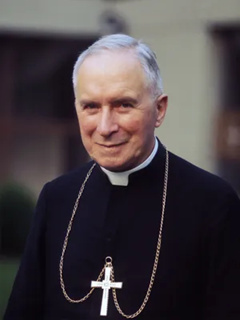
Founder of the Society of St. Pius X Archbishop Marcel Lefebvre, 1976.

How big is the Schism?  In relative size, not that big, but is it important?  

Has Rome been trapped in contradictions which can be traced all the way back to the Great Schism of 1054?  Are the Roman Catholics reaping the rewards of Vatican I and Vatican II?

The Great Schism officially occurred on 16 July 1054, when Pope Leo IX’s legate, Cardinal Humbert, excommunicated Patriarch Michael I Cerularius of Constantinople, splitting Christianity into the Roman Catholic Church and the Eastern Orthodox Church.  Although 1054 is the conventional date, the split was the culmination of centuries of growing tension, including disputes over the Filioque clause, papal authority, and liturgical practices.  While the mutual excommunications were nullified in 1965 by Pope Paul VI and Ecumenical Patriarch Athenagoras I, full communion between the two churches has never been restored.

Vatican I was held from 1869 to 1870, while Vatican II took place from 1962 to 1965.

  • Vatican I was convened by Pope Pius IX and formally defined the dogmas of papal infallibility and the primacy of papal jurisdiction.
  • Vatican II was called by Pope John XXIII (and concluded by his successor, Pope Paul VI) as a pastoral council aimed at updating the Church’s practices and fostering dialogue with the modern world.

What will be the eventual impact?

The SSPX claims approximately 1,500 formal members, including 751 priests and 264 seminarians, with a global following estimated between 150,000 and 600,000 people.  By contrast, There are an estimated 1.28 to 1.41 billion baptized Roman Catholics worldwide as of 2026. 

What is SSPX?

The Society of Saint Pius X (SSPX) is a traditionalist Catholic organization founded in 1970 by Archbishop Marcel Lefebvre, known for celebrating the Traditional Latin Mass and opposing reforms from the Second Vatican Council. Following the unauthorized consecration of four new bishops on July 1, 2026, in defiance of Pope Leo XIV, the Vatican declared the society in schism and imposed automatic excommunication on its six bishops and any lay faithful who formally adhere to the group.

Key developments include:

*   Current Status: The SSPX is now considered schismatic with invalid sacraments for confession and marriage, as previous faculties granted by Pope Francis were rescinded.

*   Excommunication: The six bishops involved incurred ‘latae sententiae’ (automatic) excommunication under Canon Law for illicit episcopal consecrations.

*   Faithful Warning: U.S. bishops and the Holy See urge Catholics not to attend SSPX Masses, labeling them an abuse of the Eucharist due to the lack of canonical jurisdiction.

*   Reconciliation: The Vatican has stated that those wishing to return to full communion will be welcomed back, though the group remains in formal rupture with the Holy See.


SSPX Schism by Jay Dyer

Jay Dyer (Orthodox Christian)

Rome, SSPX, Godlogic Zlonism & RELIGIOUS CHAOS!

Jay Dyer’s video “Rome, SSPX, Godlogic Zlonism & RELIGIOUS CHAOS!” (live-streamed July 3, 2026, on his YouTube channel) dedicates a substantial portion (roughly from ~10 minutes to over an hour) to the recent SSPX re-excommunications and their implications.

Dyer, an Eastern Orthodox Christian apologist, draws on his personal history as a former attendee of SSPX Latin Masses. He converted to Catholicism via RCIA around 2002–2003 and attended SSPX chapels for about 7–8 years (roughly until ~2007/2010). He was initially drawn by the contrast with Novus Ordo abuses (e.g., guitar or hip-hop Masses) and SSPX critiques of Vatican II. He left after theological disagreements (including over John Paul II’s canonization and Vatican II) and reports being asked to leave one chapel, with a priest (Fr. Gregory Post) threatening arrest if he returned.

Jay’s View on the SSPX

Dyer is sharply critical of the SSPX’s position, calling it inconsistent, hypocritical, and ultimately unsustainable. Key points include:

  • Unauthorized bishop consecrations: The 1988 excommunications (under John Paul II via Ecclesia Dei) and recent re-excommunications stem from Archbishop Marcel Lefebvre consecrating bishops without papal approval. The SSPX justifies this via a claimed “state of emergency” or in extremis situation. Dyer rejects this as invalid and Protestant-like, arguing it directly contradicts Vatican I’s teaching on papal authority over discipline and government (clergy and faithful must submit to Rome not only in faith and morals but also in discipline and government). The Pope is supposed to affirm/confirm every bishop.
  • Inconsistency with Vatican I and Catholic teaching: He has made this argument for nearly 20 years (since leaving the SSPX). The SSPX claims to submit to the Pope/Rome while rejecting key post-Vatican II developments and operating independently. This creates a contradiction: “Submit to Rome… and then Rome hates you and excommunicates you. You submit to Rome, you hypocrite.” Living with this daily contradiction is “a miserable life” with no peace.
  • Rejection of Vatican II and ordinary magisterium: The SSPX rejects Vatican II, but Dyer argues Catholics are bound by the ordinary magisterium (not just ex cathedra definitions), citing sources like Denzinger entries (e.g., 1683, 1698, 1722, 1792, 1830) and Canon 752, which require religious submission to papal or episcopal teachings on faith and morals even when not infallible. Rejecting this selectively mirrors errors condemned as modernist.
  • Other issues: He mentions internal SSPX scandals, divisions (some wanting fuller reconciliation with Rome), and that Rome has offered limited recognition (e.g., asking SSPX to affirm Vatican I but not fully committing to Vatican II), which he sees as insufficient or inconsistent on Rome’s part too.

Overall, Dyer portrays the SSPX as trapped in a schismatic or quasi-Protestant stance while claiming fidelity to Rome—proving the Roman system’s contradictions. Jay’s View on the Pope and Rome. Dyer views the modern papacy (post-Vatican II, including recent popes) and Rome as apostate and not the true Church. The SSPX’s troubles illustrate this broader “papal apostasy”:

  • Vatican II and its aftermath represent a departure from traditional Catholicism (liturgical changes, religious liberty/indifferentism, etc.). Popes (e.g., Francis affirming Vatican II’s liturgy as “irreversible” and magisterial) bind Catholics to these changes.
  • Rome excommunicates or marginalizes traditionalists (like the SSPX) while tolerating other errors or scandals, showing it “hates” traditionalists. “The Vatican is apostate. It’s not the true church.”
  • There is no real solution within the Roman system; the papacy itself drives the problems and religious chaos.

Overall Opinion and Context

Jay uses the SSPX situation to argue that Roman Catholicism (especially post-Vatican II) is irreparably contradictory and apostate. The SSPX’s position exposes these flaws but offers no coherent alternative within Rome. He contrasts this with Eastern Orthodoxy’s consistency on tradition, authority, and unity—implicitly (and sometimes explicitly in his broader work) presenting Orthodoxy as the better path for those seeking traditional Christianity without the contradictions. The video also covers other topics (e.g., Godlogic’s background), but the SSPX/Pope section is a detailed, experience-based critique aimed at highlighting Roman Catholic issues from an Orthodox perspective. Dyer’s tone is polemical and direct, typical of his style as a debater and apologist. This summary is based on the video’s description, metadata, and available transcript segments/excerpts. The full stream is long (~2+ hours), with the core SSPX discussion spanning a significant block.


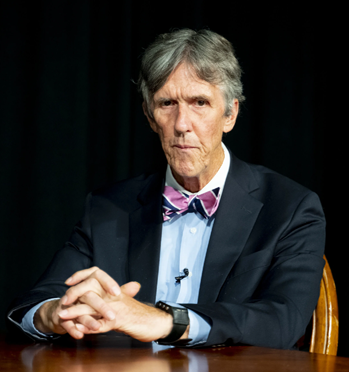
SSPX Schism by E. Michael Jones

E. Michael Jones (Roman Catholic)

EMJ Live #176 • The Vatican Obliterates the SSPX • Dr. E. Michael Jones🕞1h 9mins

  • Michael Jones’ view on the SSPX, as presented in his July 3, 2026, episode “EMJ Live #176: The Vatican Obliterates the SSPX” (≈1 hour 9 minutes), centers on the claim that the SSPX is in schism. This stance aligns with Jones’ long-held position, most notably from his 1990s debate with the late Michael Davies (referenced in the episode’s outline via a linked debate video titled “Is the SSPX in Schism? Yes or No?”). In that debate, Jones argued affirmatively that the SSPX is in schism, while Davies defended it as not schismatic due to a “state of necessity.

Core Arguments from Jones

  • Schism due to unauthorized bishop consecrations: Jones maintains that consecrating bishops without papal approval (as Archbishop Lefebvre did in 1988, and as the SSPX appears to have done or planned in the recent 2026 context) constitutes schism. He describes schism as gravely wrong—comparable in seriousness to abortion in one debate excerpt—and rejects “state of necessity” or emergency justifications as insufficient to override canonical requirements and papal authority.
  • Rejection of SSPX’s independent stance: Even amid legitimate criticisms of post-Vatican II changes, modernism, or liturgical issues, Jones argues that one cannot justify breaking from Rome or operating in a parallel structure. Selective acceptance of magisterial teachings or defiance of papal directives on discipline (e.g., bishop appointments) places the group outside full communion.
  • Recent Vatican actions as “obliterating” the SSPX: The episode title and timing (aired shortly after reports of SSPX consecrations despite papal appeals, followed by Vatican responses) indicate Jones views the Vatican’s measures—such as warnings, potential or actual excommunications, or demands for a profession of faith explicitly accepting the Second Vatican Council, the Mass of Paul VI (Novus Ordo), and papal authority—as a decisive and proper assertion of authority. He frames these actions as effectively resolving or “obliterating” the SSPX’s irregular/schismatic status by forcing a clear choice: full submission or canonical consequences.

Broader Context in Jones’ Thought

Jones is a traditional Catholic critic of modernism, Vatican II’s implementation, and cultural/religious liberalism. However, he consistently prioritizes obedience to legitimate ecclesiastical authority and rejects schism or sedevacantism as solutions to the Church’s crises. In this episode, he likely applies this framework to current events, using the Vatican’s response to underscore that the SSPX’s path confirms schism rather than preserving tradition legitimately. The show includes standard EMJ Live elements (intro, outro with his written works, quotes, and cultural commentary), but the SSPX discussion revolves around the debate reference and the implications of recent Vatican-SSPX developments. In short, Jones sees the SSPX as schismatic for defying papal authority on key disciplinary matters, and he portrays the Vatican’s recent actions as a necessary and effective step to address that schism—hence the provocative title “The Vatican Obliterates the SSPX.” This contrasts with defenders of the SSPX who invoke necessity or view the group as operating within a broader crisis in the Church.

Compare and Contrast

Jay Dyer and E. Michael Jones both address the same recent events (the SSPX’s 2026 bishop consecrations despite papal appeals, followed by Vatican responses such as warnings, excommunications, or demands for a profession of faith accepting Vatican II, the Novus Ordo, and papal authority). They share some surface-level critiques but diverge sharply in their fundamental ecclesiology, conclusions about the SSPX, and proposed paths forward.

Similarities (Points of Agreement)

  • Criticism of SSPX’s canonical actions: Both view the SSPX’s unauthorized bishop consecrations (1988 under Lefebvre and the recent ones) as problematic violations of papal authority, specifically Vatican I’s requirements on discipline and government. They reject the SSPX’s “state of emergency/necessity” justification as insufficient.
  • Acknowledgment of Church crisis: Both recognize serious issues in post-Vatican II Catholicism (liturgical changes, modernism, etc.) and reference the 1988 excommunications as a key precedent.
  • Focus on authority and consistency: Both highlight contradictions or inconsistencies in the SSPX’s position—claiming some form of fidelity to Rome while operating independently and rejecting key teachings.
  • Timing and context: Their July 3, 2026 videos respond directly to the same news cycle involving Pope Leo XIV’s appeals and Vatican actions against the SSPX.

Key Differences (Points of Contrast)On the SSPX itself

  • Jay Dyer: Sees the SSPX as hypocritical and trapped in a miserable contradiction. They claim submission to the Pope/Rome but are excommunicated and reject Vatican II/ordinary magisterium (citing Canon 752 and Denzinger). This makes them “like Protestants.” He draws on personal experience attending SSPX Latin Masses for 7–8 years (~2003 onward) before leaving amid conflicts (including threats of arrest over canonization issues). He mentions internal scandals and divisions but frames the SSPX’s problems as symptoms of Rome’s deeper failures rather than solely the SSPX’s fault.
  • E. Michael Jones: Views the SSPX as objectively in schism. He has held this position since at least the 1990s (explicitly referenced via his debate with Michael Davies, where Jones argued “Yes, the SSPX is in schism”). Unauthorized consecrations violate Church law and papal authority; “state of necessity” does not excuse it. Schism is gravely wrong (he has compared it in seriousness to abortion in debate excerpts). He sees the SSPX’s defiance as confirming schism rather than a legitimate response to crisis.

On the Pope, Vatican, and Rome

  • Jay Dyer: Extremely negative. Post-Vatican II Rome (including recent popes) is apostate and “not the true Church.” Vatican II promotes errors (e.g., indifferentism, irreversible liturgical changes). The Vatican “hates” traditionalists, excommunicates them while tolerating other problems, and has no solution. SSPX troubles prove Rome’s apostasy. He links this to broader “religious chaos.”
  • E. Michael Jones: More affirmative of recent Vatican actions. He portrays the Vatican’s response (excommunications, demands to accept Vatican II/Novus Ordo/papal authority) as “obliterating” the SSPX—a decisive, proper exercise of authority that resolves the group’s irregular status. While critical of modernism and Vatican II’s implementation, Jones upholds papal authority and rejects schism. He does not call Rome apostate.

On Solutions and Broader Ecclesiology

  • Jay Dyer (Eastern Orthodox): The SSPX’s contradictions expose the fatal flaws of Roman Catholicism itself. There is no fix within Rome—Vatican II and subsequent developments have led to apostasy. The consistent path for traditional Christianity is Eastern Orthodoxy, which avoids these contradictions of authority and magisterium.
  • E. Michael Jones (Traditional Catholic): The solution lies in submission to legitimate papal authority. The SSPX should accept the Vatican’s terms or face the canonical consequences of schism. Upholding unity under Rome takes precedence over independent traditionalist structures, even amid legitimate grievances about the post-Vatican II Church. Jones remains firmly within Roman Catholicism.

 Summary of the Contrast

Jay Dyer uses the SSPX situation as evidence against Roman Catholicism as a whole, leveraging his personal history in the group and his Orthodox perspective to argue for leaving Rome entirely. E. Michael Jones treats the SSPX as a schismatic problem within Catholicism that the Vatican is rightly correcting through authority, consistent with his long-standing theological position (e.g., the Davies debate) and his commitment to Roman ecclesiology. In essence:

  • Jay sees both the SSPX and Rome as broken, with Orthodoxy as the answer.
  • Jones sees the SSPX as broken (schismatic) and the recent Vatican response as a needed corrective within a still-valid Roman framework.

Their backgrounds explain much of the divergence: Jay as an Orthodox convert/critic of Rome versus Jones as a traditionalist Catholic defender of papal authority against schism. Both videos reflect the heated 2026 debates over SSPX consecrations but arrive at opposing prescriptions.


THE GREAT SCHISM

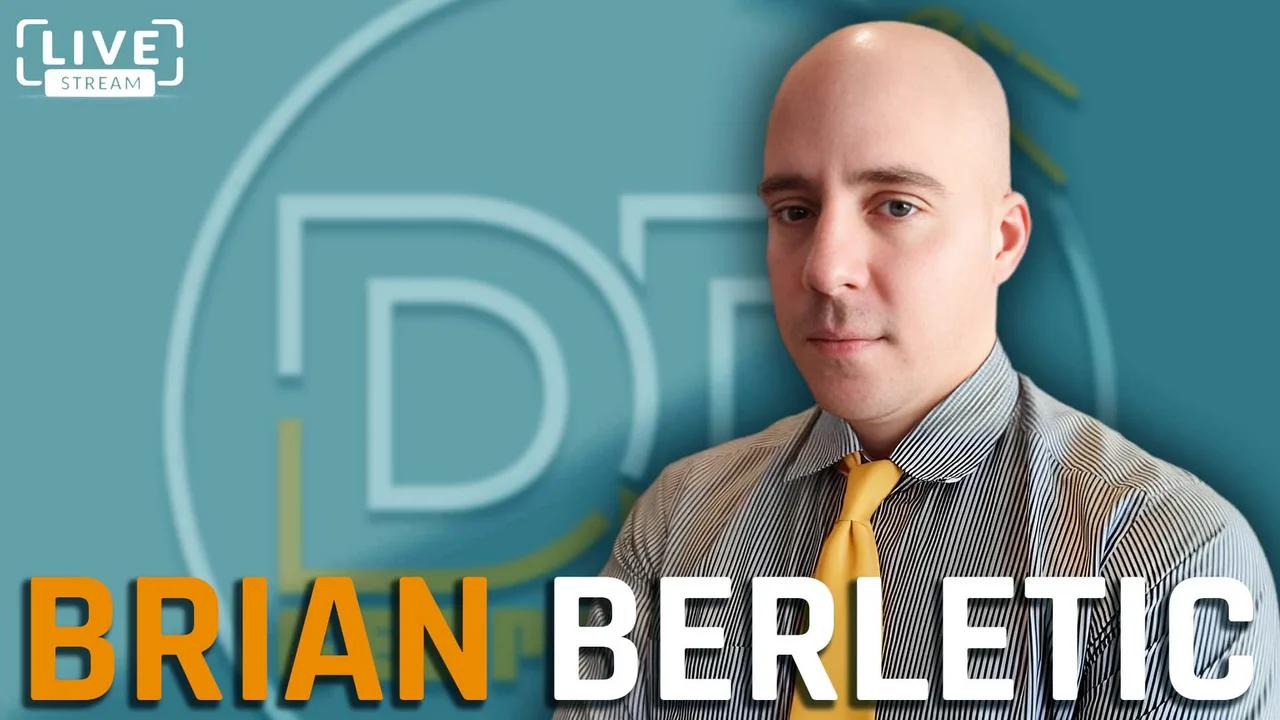
Brian Berletic exposes most powerful US weapon

From the New Atlas by Brian Berletic: (Bangkok-based geopolitical researcher and writer, former US marine officer)

Lessons Learned: Today’s US Empire is using the same methods exposed by Carroll Quigley in ‘The Anglo-American Establishment’.  See Milner’s Kindergarten and the Rhodes Scholarships.

Brian provides a detailed, point by point, case study exposing the US’s most powerful geopolitical tool:  The Quiet Capture of Armenia: The Secret War the US Wages Beyond Armed Conflict (& How to Stop it)

The admitted election interference and political capture of these nations by the United States spanning the entire 21st century has changed the global geopolitical map in Washington’s favor. Yet this process still remains a poorly understood, under-reported, yet an incredibly powerful US tool in its pursuit of primacy and its “insuring no rivals develop.”

Nations like Russia and China are clearly aware of this US method of infiltrating and capturing the political, educational, cultural, and informational space of targeted nations along their respective peripheries and beyond – leading to the subsequent hijacking and transformation of these nations’ military and economic power from serving self-preservation to serving as self-destructive proxies aimed at both nations.

Both nations through government and media programs have published reports and documentaries detailing the process – but often long after US success.

Unfortunately, the state media of both nations have repeatedly failed to “get ahead” of US infiltration and subversion – often with both Russian and Chinese state media simply repeating Western media narratives depicting protests organized by the US as “pro-democracy” or “anti-corruption” movements – thus amplifying US information warfare.

Brian’s Blog: https://landdestroyer.blogspot.com/2026/06/us-cements-political-capture-of-armenia.html

NEO: https://journal-neo.su/2026/06/15/us-cements-political-capture-of-armenia-as-it-advances-extending-russia-strategy/

References:

NYT – U.S. Strategy Plan Call for Insuring No Rivals Develop (1992):
https://www.nytimes.com/1992/03/08/wo…
RAND Corporation – Extending Russia (2019):
https://www.rand.org/content/dam/rand…
NED – Annual Report (2018):
https://www.ned.org/annual-report/201…
Guardian – US campaign behind the turmoil in Kiev (2004):
https://www.theguardian.com/world/200…
Union of Informed Citizens – Annual Report 2021:
https://uic.am/wp-content/uploads/202…
EU Neighbours East – The Armenian TV station giving people a voice and space to speak (2025):
https://euneighbourseast.eu/news/stor…
NED – Annual Report 2019, In Focus: Armenia:
https://www.ned.org/annual-report/201…
Chinese Ministry of Foreign Affairs – ​The National Endowment for Democracy:What It Is and What It Does (2024):
https://www.fmprc.gov.cn/eng/xw/wjbxw…

Where to Find Brian’s Work:

Website: https://landdestroyer.blogspot.com/
Telegram: https://t.me/brianlovethailand
Twitter: / brianjberletic
Rumble (YouTube alternative): https://rumble.com/c/c-1459863

The story the media — and the government — don’t want you to hear

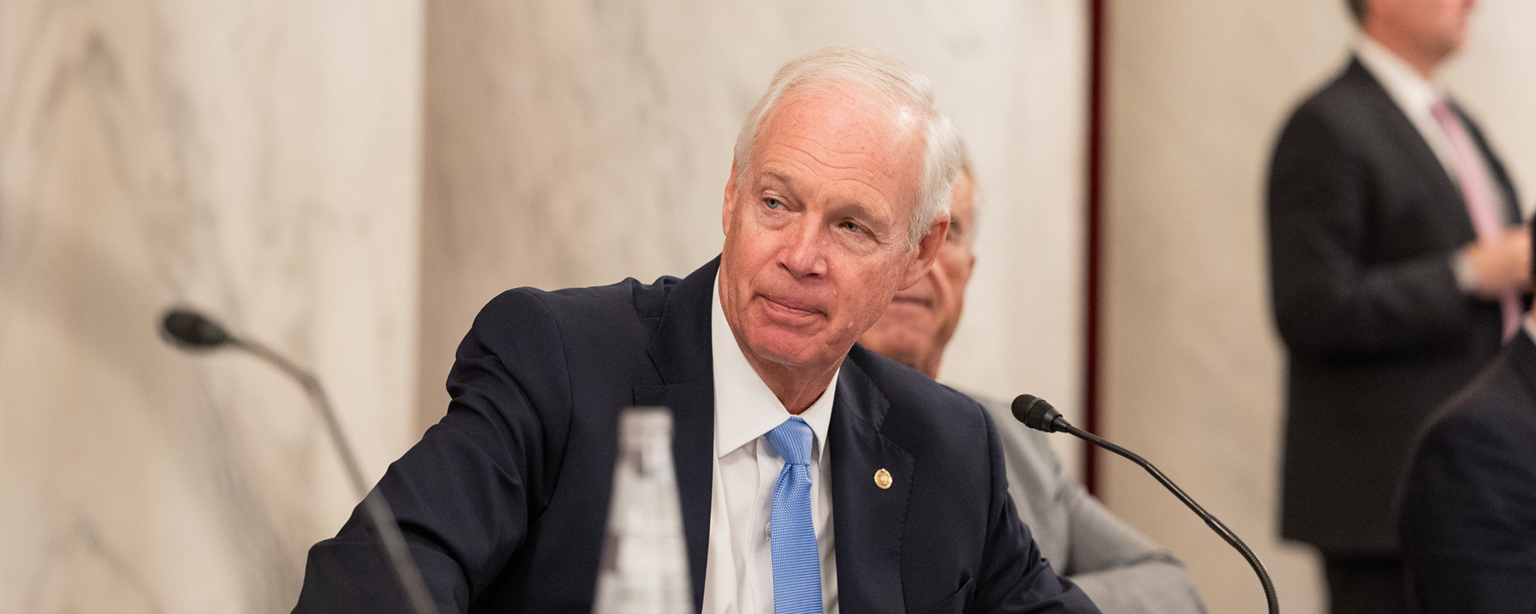
Sen. Ron Johnson

Read about the biggest government scandal that legacy newspapers won’t touch.

On April 29, 2026, as Chairman of the Senate Permanent Subcommittee on Investigations, I held a hearing and released a report titled “Unmasked: How Biden Health Officials Purposely Turned a Blind Eye Toward COVID-19 Vaccine Safety Signals.” There has not been a bigger government scandal during my lifetime, and yet even now that we have documented proof of corruption, most of the legacy media refuses to report on it.

My report details how in March 2021, Peter Marks — director of the FDA center that approves vaccines and is responsible for safety surveillance (CBER) — was briefed that the algorithm they were using to analyze the Vaccine Adverse Event Reporting System (VAERS) would mask or hide COVID-19 vaccine adverse event safety signals. Twenty-six days later, using an updated algorithm, senior FDA officials were shown 25 safety signals, including sudden cardiac death, pulmonary infarction, cerebral artery occlusion, basal ganglia stroke, agonal rhythm, and Bell’s palsy.

For the next three months, they received updates showing more serious safety signals. Instead of warning or informing the public, they ordered the data analyst to “cease and desist” and then lied to the American public that “they weren’t seeing safety signals” and that any adverse events were “rare and mild.” The whole point of using sophisticated algorithms to analyze VAERS is to find needles in the haystack — nonobvious potential harms that doctors and patients should be alerted to.

With the COVID-19 injections, we didn’t need sophisticated algorithms. The sheer volume of adverse event reports overwhelming VAERS was enough to trigger my oversight efforts. We faced impenetrable stonewalling until Secretary Kennedy’s commitment to radical transparency provided my Subcommittee with 11 million pages of documents. The documents make clear that FDA and CDC officials did not use an “err on the side of caution” standard to alert the public. Rather, they insisted on definitive proof of causation — a standard they knew would never be met.

They were far more concerned about not causing vaccine hesitancy than they were about informing the public of adverse events. They wanted to ensure that the injections would receive full licensure approval so that President Biden could mandate them to the military and millions of civilians, including healthy college students.

Perhaps the most egregious coercion involved healthy children who had virtually zero chance of serious harm from COVID-19. That coercion was based on another false claim that the injections would stop transmission. Some children were killed and others have been permanently disabled from the COVID-19 injections. Imagine being the parent who believed all the lies they were told and decided to have their now deceased or injured child injected.

Also in March 2021, Dr. Avindra Nath, clinical director at the National Institute of Neurological Disorders and Stroke (NINDS), began leading a team of clinical researchers who were diagnosing and treating individuals with serious COVID-19 injection injuries. Twenty-three study participants were diagnosed and treated, then instructed to “not talk about the study” until the NIH could release its findings and conclusions. Dr. Nath maintained that early recognition and intervention were crucial for effective treatment. Yet no guidance was provided to physicians — one participant remarked that the NIH scientists had “taken the data and left us hanging.”

Adding insult to injury, in April 2021 the CDC published a report stating that similar adverse events were “anxiety” — not a problem with the shots. It was not until study participants began speaking publicly in 2022 that the NIH quietly posted its study on a preprint server that virtually no one read, leaving medical teams nationwide in the dark and the injection-injured left untreated.

We will never know the full extent of the harms (or the benefits) of the COVID-19 injections. But we do know that federal health officials were aware that serious harm was being done within months of them granting Emergency Use Authorization. We also know that those same officials turned a blind eye toward the safety signals that were screaming at them, but they refused to warn the public. The public pays federal health officials to evaluate drugs for safety and efficacy, and we have the right to be informed.

How many deaths and injuries could have been avoided had federal health officials simply done the job we paid them to do?

Currently, VAERS shows 1,676,100 cumulative worldwide adverse events and 39,099 deaths associated with the COVID-19 injection, with 9,332 (24%) of the deaths occurring within 2 days of injection. Most of these tragic adverse events occurred well after federal health officials should have informed the public about the risks they knew existed. Instead, they hid or downplayed those risks. As a result, millions were harmed after being denied their right to fully informed consent.

That’s why I consider this to be the biggest government scandal in my lifetime, and one that is crying out for full media attention and coverage.

The Wall Street Journal, The New York Times, The Washington Post, USA TODAY, and Fox Digital have all declined or ignored requests to publish this op-ed.

NBC, ABC, PBS, CNN, and MSNow have all refused to cover my report.

Read the full report here.

Source: https://x.com/SenRonJohnson/status/2067427189759332619?s=20


Joe Rogan just revealed that presidents and former presidents personally pressured Spotify to have him removed for “vaccine misinformation.” And not one of them apologized when his questions turned out to be right. He says he still can’t talk about most of it. What he will say is that the campaign was coordinated, expensive, and came from the very top. ROGAN: “They tried to crush my sponsors. They organized campaigns. There was PACs involved.” ROGAN: “I can’t even talk about it. But there was presidents involved and former presidents involved that were contacting Spotify. Trying to get me removed for vaccine misinformation.” ROGAN: “And it turned out to be right. All of it.” ROGAN: “Not a single apology from anybody. Not a single retraction, not a single mea culpa, not a single ‘we were wrong.'” The pressure failed. Joe’s audience grew. And the people who tried to silence him never had to answer for any of it…

Link:  https://x.com/VigilantFox/status/2067300993608655211?s=20


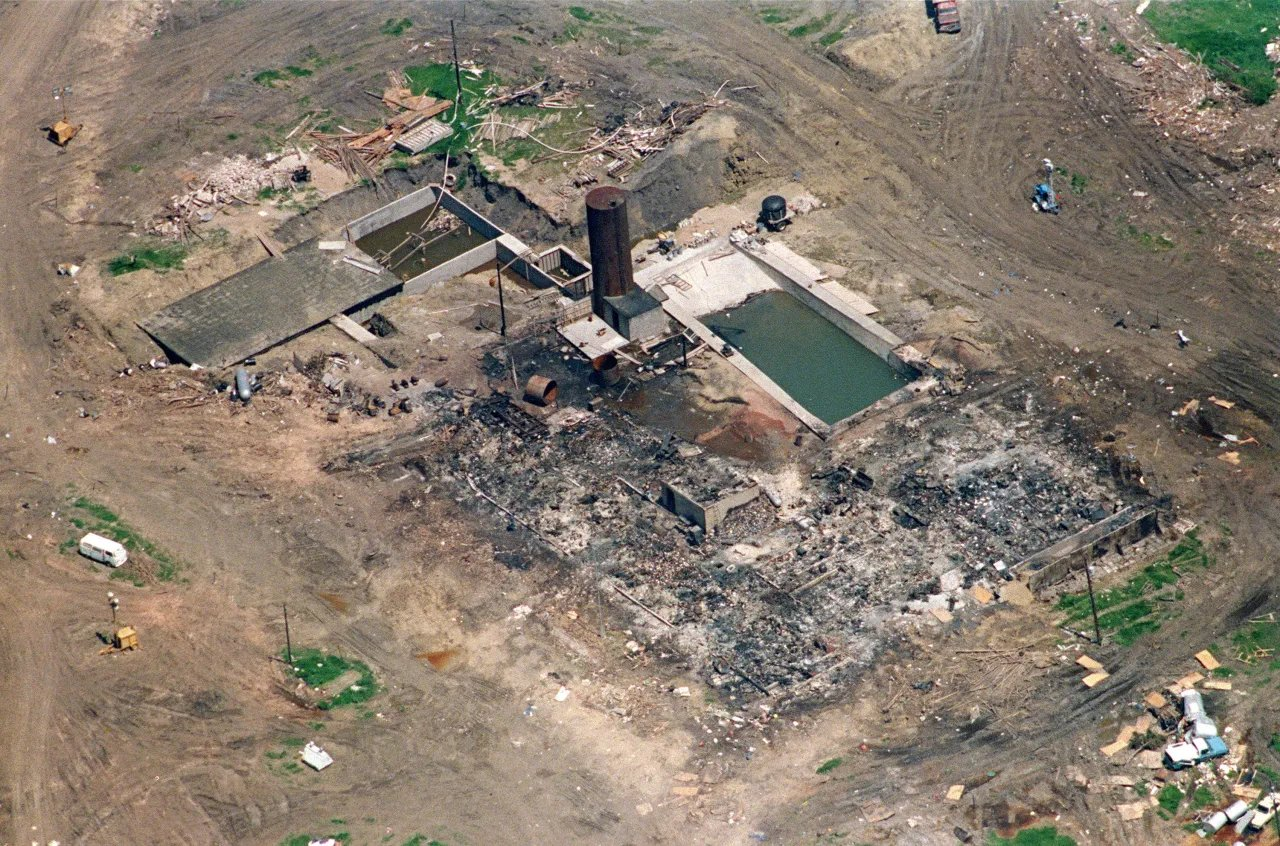
The Waco Tragedy

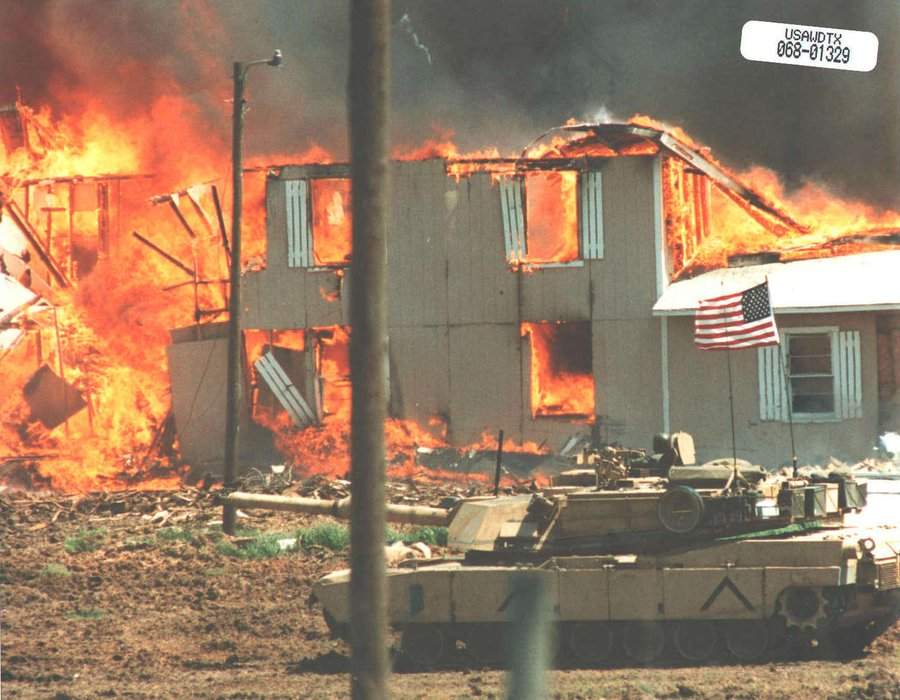
The Waco siege began on February 28, 1993 killing 76 people inside, including 25 children

The Waco siege began on February 28, 1993 killing 76 people inside, including 25 children

Speech: What You Need to Know About Waco with Scott Horton…

In 1993 the US Federal government murdered 86 men, women and children in a show of force. Since then the FBI and ATF have tried to cover their tracks by pinning the deaths on “religious extremism” and David Koresh. In this talk Scott Horton will tell you the truth about that day. Speaker: Scott Horton, Scott Horton is director of the Libertarian Institute, editorial director of Antiwar.com, host of Antiwar Radio on Pacifica, 90.7 FM KPFK in Los Angeles, California and podcasts the Scott Horton Show from ScottHorton.org.

Scott Horton Waco Documentary:

The Waco Tragedy feat. Dave Hardy, Dan Gifford, James Tabor, Paul Fatta, David Thibodeau, Jim Bovard, Barbara Grant, Mike McNulty

Scott Horton has produced and hosted extensive coverage of the 1993 Waco tragedy, most notably a 13-hour special production titled “The Waco Tragedy” released for the 30th anniversary, which features interviews with survivors, experts, and journalists. This comprehensive project includes discussions on infrared footage analysis, the ATF raid, the 51-day siege, and the April 19 fire, challenging the official government narrative.

Key documentaries and segments featured in his work include:

Waco: The Rules of Engagement: A seminal film by Dan Gifford that scrutinizes the forward-looking infrared (FLIR) footage, which Horton has repeatedly highlighted to question the government’s account of the final day.

Waco: A New Revelation: A follow-up film that presents a cleaner copy of the infrared footage, suggesting flashes were gunfire rather than solar reflections, a point further analyzed by engineer **Barbara Grant**.

When the Government Lied: Waco’s Infrared Deception: A documentary by Barbara Grant that uses her expertise in radiometry to argue that federal agents fired on Branch Davidians during the siege’s final moments.

Horton’s interviews with figures such as David Thibodeau (a surviving Branch Davidian), Jim Bovard, Dan Gifford, David Hardy, and Barbara Grant provide a detailed alternative perspective on the events, covering the Branch Davidians’ theology, the FBI’s tank and gas attacks, and subsequent cover-ups. These resources are available on scotthorton.org and YouTube, often serving as primary sources for those investigating the incident beyond mainstream media accounts.

Christian Secor on The American Regime

Christian Secor on The American Regime
by Our Interesting Times

EPISODE DESCRIPTION
Christian Secor joins Our Interesting Times to discuss his book The American Regime, now in its second edition. Originally written anonymously from prison following the events of January 6th, the book offers a provocative analysis of power, oppression, and the nature of the modern American political order.

The American Regime by Christian Secor, 2nd Edition:

The American Regime by Christian Secor, 2nd Edition


Christian Secor: This book is dedicated to all the patriot dissidents held as political prisoners or otherwise repressed by the satanic regime which has seized power in the United States, but most especially the following:

ASHLEY BABBITT, an Airforce veteran who was shot in the neck, though she was unarmed, and whose murderer remains at large.

JOHN ANDERSON, a Marine Corps veteran murdered in prison by the state while being held indefinitely and illegally on fake charges. His murderers remain at large.

ROSANNE BOYLAND, who was beaten to death by Capitol Police, and whose murderer remains at large.

BENJAMIN PHILLIPS, hit on the head with a flashbang grenade. The police refused to help him while his heart had stopped. His murderer remains at large.

KEVIN GREESON, also killed by a flashbang grenade to the skull. The police refused to resuscitate him. His murderer remains at large.

MATTHEW PERNA, driven to suicide by the media and state because he trespassed in the “people’s house.”

To the prisoners and exiles of the RISE ABOVE MOVEMENT, whose only crime was to defend peaceful MAGA demonstrators from Antifa.

These are only a few. The regime’s many illegal acts of state terror are so numerous that they are difficult to count, but not a single one will be forgotten or unaccounted for.

I am proud of what I did. May these enemies of the people suffer many times what they have inflicted.

They will not replace us.

U.S. military’s first strike against Iran on 28 February 2026

The U.S. military’s first strike against Iran on 28 February 2026 killed between 175 and 180 people, most of them schoolgirls aged 7 to 12, in a missile attack on the Shajareh Tayyebeh primary school in Minab, southern Iran. The strike, part of Operation Epic Fury, involved multiple missile hits, including a “triple tap,” and occurred while students were still on school grounds despite early efforts to evacuate.

“My name is Josephine Gilboa. I’m a former intelligence officer. I served 17 years in the US military. A modern Tomahawk missile is equipped with built-in cameras. Satellite imagery is continuously collected by multiple intelligence agencies and countries. Instantly, the entire school was surrounded by colorful children’s drawings, flowers, and vibrant wall murals. From satellite imagery, there was no doubt it was a school. At 10:00 a.m., Israel and the United States began attacking Iran. At 10:20 a.m., Minneapolis School staff were evacuating the children. The first strike hit the school. The children moved to the prayer room. The second strike also hit the prayer room. 163 children were killed. To ensure the accuracy of US Navy and military operations and to minimize errors, intelligence reports from multiple sources, regional sources, and US officials are required. That’s how it works. We bombed a school, and we knew it was a school. Who are the terrorists? Who are the bad guys in this story? This is our version of the story according to our definition of terrorism. And as a former counterterrorism officer, I can say this: We are the terrorists, we are the bad guys.”

Source: https://x.com/gokhansasi/status/2044741059389878618?s=20

The War against China – connecting the dots

US War on China | Energy Blockade on China

By Brian Berletic

US/IRAN/China NEW VIDEO: US War on Iran & the Wider Dirty War on China: US/Ukrainian Mercenaries In Myanmar

X / Twitter: (Video)
Rumble: (Video)

Summary: 
– While the US attack on Iran throttles energy production and exports to China, following the cutting of energy exports from Venezuela to China in a war earlier this year, and years of attacking Russian energy production via Ukraine, US-backed militants in Myanmar are attacking pipelines leading directly into China;

– A US citizen and several Ukrainians were caught bringing in large numbers of combat drones to fight the central Myanmar government and attack key infrastructure across the country including Belt and Road Initiative projects;

– Zooming out from any one of these conflicts reveals a global US war and proxy war as well as a developing global oil blockade against China;

References:

  • NEO – American/Ukrainians Caught Arming Militants in Myanmar and the US Dirty War on China (Mar. 20, 2026): https://journal-neo.su/2026/03/20/american-ukrainians-caught-arming-militants-in-myanmar-and-the-us-dirty-war-on-china/
  • The Indian Express – NIA arrests six Ukrainians, one from US for plotting terror activities in India (Mar. 17, 2026): https://indianexpress.com/article/india/nia-arrests-six-ukrainians-one-from-us-for-plotting-terror-activities-in-india-10585555/
  • Reuters – Ukraine seeks release of citizens arrested in India over alleged Myanmar drone activity (Mar. 18, 2026): https://www.reuters.com/world/asia-pacific/ukraine-seeks-release-citizens-arrested-india-over-alleged-myanmar-drone-2026-03-18/#:~:text=By%20Krishna%20N.,Sign%20up%20here.
  • CNBC – Who is Matthew VanDyke? NIA arrests US citizen and six Ukrainians for links with anti-India insurgent groups (Mar. 19, 2026): https://www.cnbctv18.com/india/nia-arrests-us-citizen-matthew-aaron-vandyke-six-ukrainians-anti-india-drone-warfare-training-network-in-myanmar-ws-l-19871344.htm
  • Newsweek – Meet Matthew VanDyke, Former U.S. POW Training Ukrainians to Fight Russia (Apr. 2022): https://www.newsweek.com/meet-former-u-s-pow-training-ukrainians-fight-russia-1699373

US-Backed Militants and Opposition in Myanmar

  • The New Atlas – Myanmar: US-backed Fronts Behind War, Blocking Development – starts at around 1 minute, 30 seconds (2021):
    https://youtu.be/7ReeqgDlHmk?si=TIPbp5XRRSVl8Utr&t=91
  • Wikileaks – THAILAND: ALLEGED USE OF CHEMICAL WEAPONS ALONG THAI BORDER:
    https://wikileaks.org/plusd/cables/05BANGKOK3930_a.html
  • Wikileaks – SNAPSHOT OF NORTHERN KAREN STATE PROVIDES LITTLE HOPE:
    https://wikileaks.org/plusd/cables/08CHIANGMAI32_a.html
  • Wikileaks – FREE BURMA RANGERS: PROVIDING HUMANITARIAN RELIEF; NOT ARMING
  • INSURGENTS: https://wikileaks.org/plusd/cables/07CHIANGMAI188_a.html
  • Wikileaks – KAREN GROUPS SAY FIGHTING WON’T REACH REFUGEE CAMPS IN THAILAND:
    https://wikileaks.org/plusd/cables/07CHIANGMAI70_a.html
  • Wikileaks – MILITARY DETENTION OF AMCIT UNDERSCORES SHIFT IN THAI POLICY TOWARD BURMA: https://wikileaks.org/plusd/cables/08CHIANGMAI69_a.html
  • The World – Myanmar Elections: A Changing Country and its Exiled Opponents (2013):
    https://web.archive.org/web/20250120151946/https://theworld.org/stories/2013/08/15/myanmar-elections-changing-country-and-its-exiled-opponents
  • US NED – Burma (Myanmar) (2020):  https://web.archive.org/web/20210314232434/https://www.ned.org/region/asia/burma-2020/
  • VOA – Myanmar Shadow Civilian Government Opens Office in Washington (2022): https://www.voanews.com/a/myanmar-shadow-civilian-government-opens-office-in-washington-/6840870.html
  • NUG “Ministry of Foreign Affairs” – Zin Mar Aung: https://mofa.nugmyanmar.org/h-e-daw-zin-mar-aung/
  • US NED – Ms. Zin Mar Aung:
    https://web.archive.org/web/20201202195214/https://www.ned.org/fellows/ms-zin-mar-aung/
  • US State Department – International Women of Courage Award Winners 2012:
    https://2009-2017.state.gov/s/gwi/iwoc/2012/bio/index.htm
  • The New Atlas – Washington’s, Not Myanmar’s “National Unity Government” (2021):
    https://youtu.be/AqoM5JwnQcI?si=sMdbz_sZivTov7Bl

A Maritime Oil Blockade On China

  • US Naval War College Review – A Maritime Oil Blockade Against China—Tactically Tempting but Strategically Flawed (2018): https://digital-commons.usnwc.edu/cgi/viewcontent.cgi?article=1735&context=nwc-review
  • NYT – The Separation (Dec. 30, 2025): https://www.nytimes.com/interactive/2025/12/30/world/europe/ukraine-war-us-russia.html

Where to Find Brian’s Work:

  • Website: https://landdestroyer.blogspot.com/
  • Telegram: https://t.me/brianlovethailand
  • Twitter: https://twitter.com/BrianJBerletic
  • Rumble (YouTube alternative): https://rumble.com/c/c-1459863

How to Support Brian:

  • Buy Brian A Coffee: https://www.buymeacoffee.com/TheNewAtlas
  • Patreon: https://www.patreon.com/landdestroyer
  • PromptPay: 0851547235

Related:

This is the REAL Endgame in Iran by James Corbett

Update Iran

Can Israel & the U.S. Sustain Iran’s Military Power? (w/ Alastair Crooke) | The Chris Hedges Report (March 7, 2026)

  • Iran’s superior preparation and missile strategy enable prolonged attrition warfare: Iran maintains vast decentralized stocks of missiles (including advanced hypersonics held in reserve), buried silos with autonomous “dead hand” firing capabilities across multiple districts, and uses older systems to exhaust Israeli/U.S. interceptors before escalating, making a long war sustainable for Iran while depleting attackers’ defenses.
  • The conflict has already inflicted significant strategic losses on Israel and the U.S.: Israeli interceptor missiles are being rapidly depleted, billion-dollar U.S. radar systems destroyed, and intelligence capabilities crippled; this reflects impulsive escalation driven by hubris, with shifting pretexts from nuclear threats to missile destruction and regime change.
  • Iran leverages regional Shia mobilization and symbolic acts for broader escalation: The killing of key figures (including the Supreme Leader) has sparked Shia solidarity, uprisings (e.g., in Bahrain), attacks on U.S. assets, and fatwas for jihad, turning the war into a wider sectarian/regional struggle that spreads beyond Iran’s borders and complicates U.S./Israeli objectives.
  • Control of the Strait of Hormuz gives Iran decisive economic leverage: Iran can threaten or close the strait (via mines, missiles, and coastal artillery), endangering global oil/LNG flows (~20-30% of world supply), pressuring energy markets, weakening the dollar, exposing Europe’s vulnerability, and shifting Gulf power dynamics toward Iran while making sustained U.S. naval operations risky or unsustainable.
  • U.S. and Israel face unsustainable overreach with no clear path to victory: The war—pushed by Netanyahu’s influence on Trump—lacks contingency plans for energy crises, long-term attrition, heavy civilian casualties (e.g., bombed schools), internal Israeli fractures, or political backlash at home; Iran “wins by surviving,” potentially forcing de-escalation on its terms (sanctions relief, troop withdrawal) amid regional blowback and economic fallout.


Also… 


(May 26, 2026) GLOBAL ECONOMY WILL ONLY GET WORSE DUE TO IRAN WAR – w/ Analyst Alex Krainer


How Epstein Hijacked Bitcoin with Aaron Day

How Epstein Hijacked Bitcoin with Aaron Day by Corbett | Feb 27, 2026 | (Video)

From the hijacking of bitcoin to the passing of the GENIUS Act, a deep dive in the Epstein files reveals Epstein’s fingerprints are all over the transformation of the global economy and our digital currency enslavement. Aaron Day joins us today to discuss “The Hijacking of Bitcoin,” his detailed and well-documented breakdown of how and why Epstein hijacked bitcoin.

The Hijacking of Bitcoin (article)


A forensic investigation on the major movers and shakers of the cryptocurrency industry that explores the people, businesses, investments, patents, and infrastructure behind the blockchain and the oncoming new financial system.  The Chain.


JAKEGTV @JakeG_Official 12 minutes on stage at Anarchapulco. Full, unedited speech.

The Epstein Money Trail Finally Exposed | Harley Schlanger